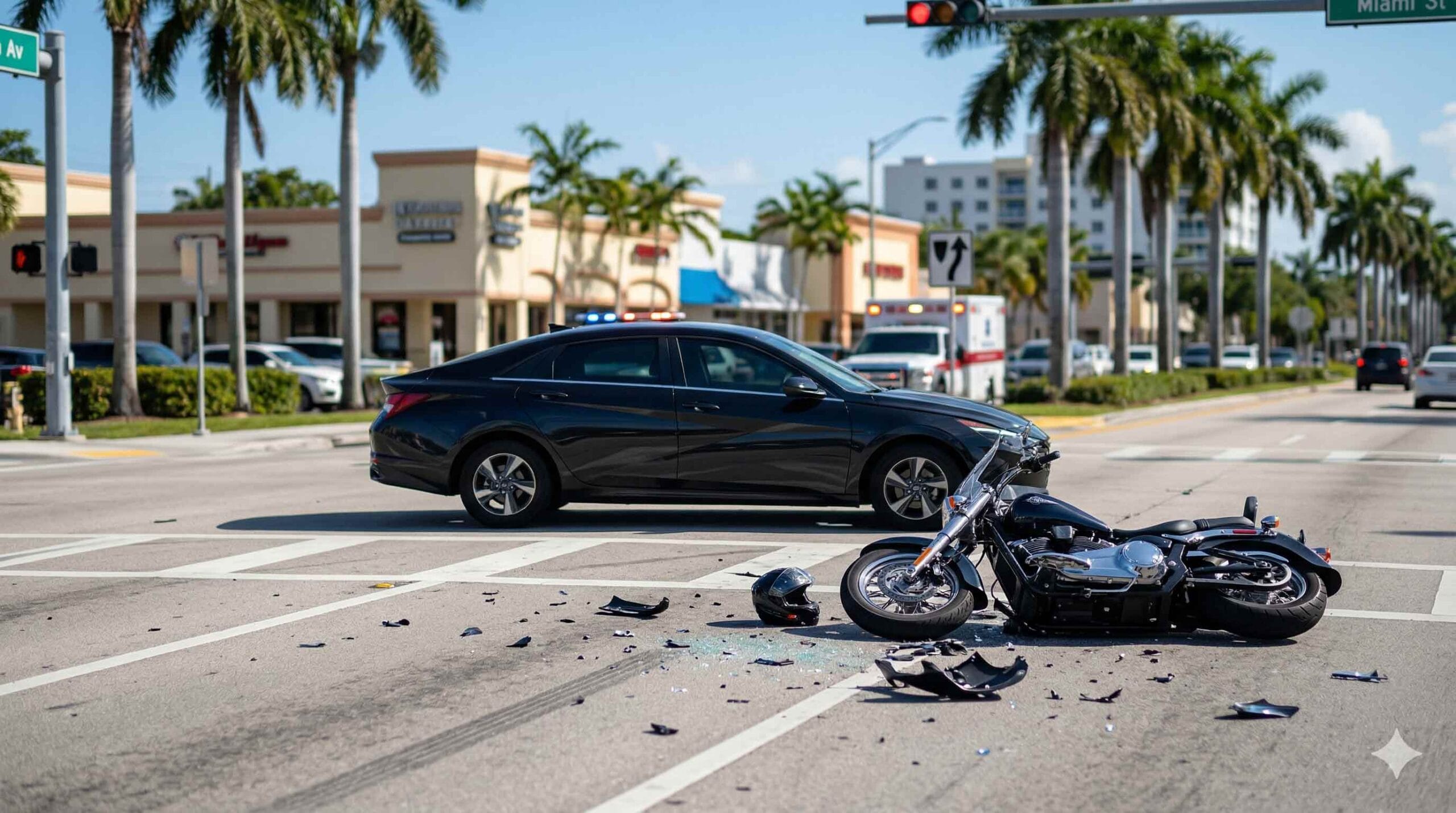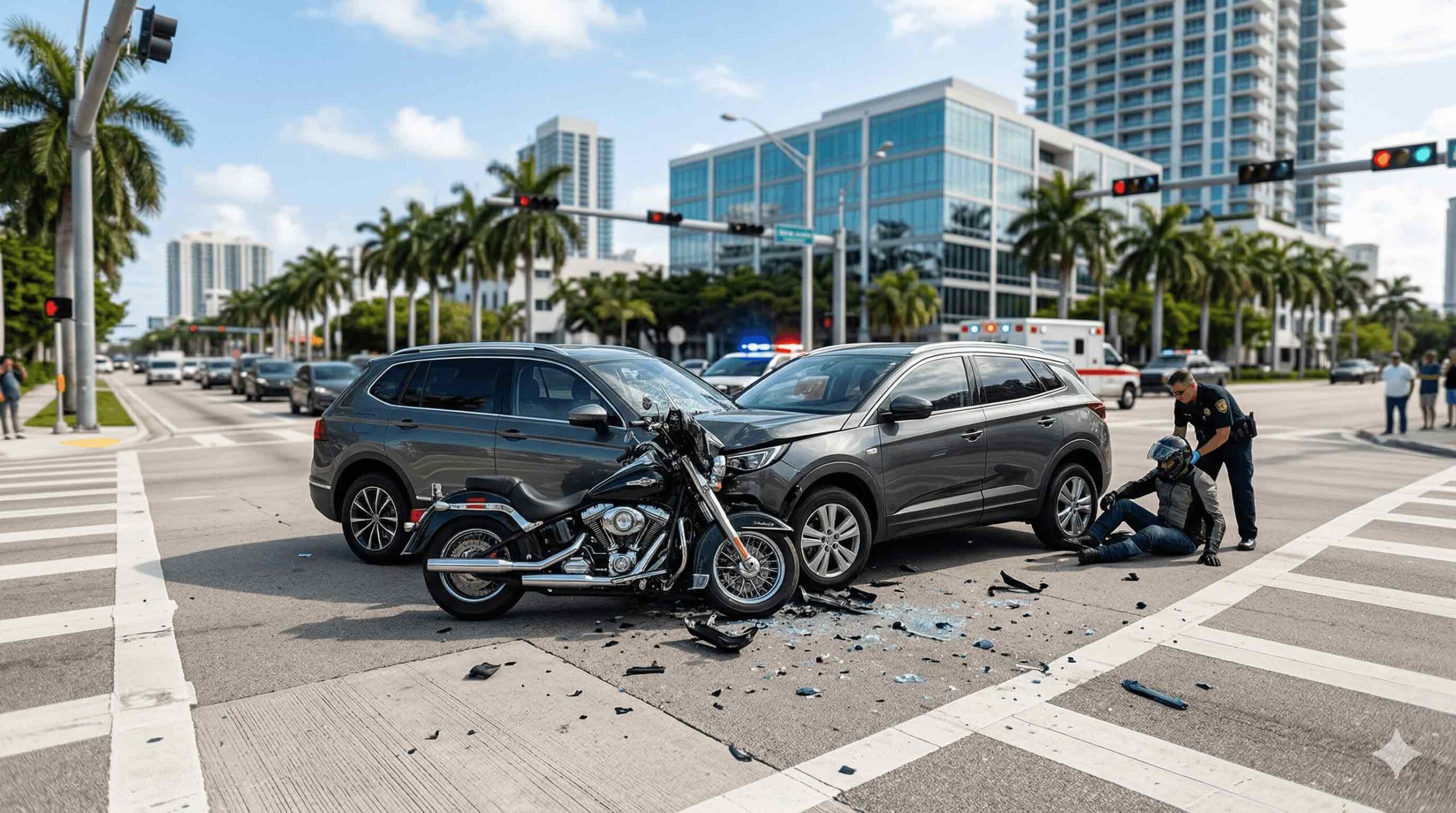
Riding a motorcycle through South Florida is an incredible experience, but it undeniably comes with inherent vulnerabilities. When a traditional passenger vehicle loses a tire, the driver can typically steer the car safely to the shoulder. However, Tire Blowout Motorcycle Accidents are an entirely different, highly dangerous scenario.
When a two-wheeled vehicle experiences a sudden, explosive tire failure at highway speeds, the rider instantly loses control. These terrifying events frequently lead to catastrophic collisions, severe trauma, and profound emotional distress.
We understand the overwhelming physical and financial burdens you face in the aftermath of a severe crash. You may feel like no one is to blame for a “blown tire,” but that is rarely the truth. Our dedicated legal team is here to help you uncover the facts, protect your rights, and fight for the justice you deserve.
The Devastating Nature of Tire Blowout Motorcycle Accidents
A tire blowout is far more dangerous than a standard flat tire. A blowout occurs when a tire violently and instantly deflates, instantly altering the physics of the motorcycle.
The immediate loss of air pressure causes the motorcycle’s rim to strike the pavement, severely compromising the bike’s balance and steering. Riders are often violently thrown from their bikes or forced into adjacent lanes of heavy traffic.
Because motorcyclists lack the steel frame, airbags, and seatbelts of a standard car, they absorb the full force of the impact. The resulting injuries are rarely minor, and the financial toll of emergency medical care can be staggering.
Common Causes of Tire Blowout Motorcycle Accidents
To build a successful legal claim, your attorney must first determine exactly why the tire failed. Blowouts rarely happen without an underlying cause rooted in negligence or product defects. Common factors include:
Defective Tire Manufacturing and Design
Even a minor flaw in the manufacturing process can lead to deadly consequences on the road. Defective tires may suffer from weak adhesives, impure rubber compounds, or structural design failures.
These defects often lead to tread separation, where the outer tread peels away from the casing of the tire. This is especially common when riding at high speeds or in the extreme heat typical of South Florida summers.
Poor Road Conditions and Potholes
Municipalities have a legal obligation to maintain reasonably safe roadways. When local governments ignore deep potholes, severe pavement cracks, or dangerous construction debris, they create deadly hazards.
Hitting a severe pothole at speed can instantly rupture a motorcycle tire, causing an immediate blowout and loss of vehicle control.
Improper Maintenance and Installation
Motorcyclists frequently rely on professional mechanics to install new tires and perform routine maintenance. If a shop installs the wrong size tire, pinches the inner tube, or fails to properly balance the wheel, the tire is at a high risk of catastrophic failure.
Additionally, over-inflating or under-inflating a tire causes uneven wear and excess heat buildup, which are primary catalysts for sudden blowouts.
Catastrophic Types of Harm Sustained in These Crashes
The physical consequences of a high-speed motorcycle crash are devastating. A single, severe injury can permanently alter a victim’s quality of life and ability to earn a living.
Because riders are exposed to the pavement and other vehicles, the trauma is often life-threatening. The most common injuries include:
Traumatic Brain Injuries (TBIs): Even with a helmet, the violent impact of hitting the pavement can cause concussions, brain bleeding, or permanent cognitive impairment.
Spinal Cord Damage: A forceful ejection from a motorcycle can fracture vertebrae or sever the spinal cord, leading to partial or total paralysis.
Severe Road Rash: Friction burns from sliding across the asphalt can destroy multiple layers of skin and muscle tissue, requiring painful skin graft surgeries.
Complex Bone Fractures: Riders frequently suffer crushed extremities, shattered pelvises, and broken ribs that require immediate surgical intervention.
Determining Liability in Tire Blowout Motorcycle Accidents
Many victims mistakenly believe that a tire blowout is just an unavoidable “act of God.” In reality, extensive investigations usually reveal that a specific party’s negligence caused the failure.
Depending on the circumstances of your crash, one or more of the following parties may be held legally accountable:
Holding Manufacturers Strictly Liable
If your blowout was caused by a manufacturing or design defect, you do not necessarily have to prove that the manufacturer was “careless.” Under the legal doctrine of Strict Product Liability, manufacturers are held strictly accountable for releasing dangerous products into the stream of commerce.
Your attorney will work with accident reconstructionists and tire engineering experts to prove that the tire was inherently defective when it left the factory.
Government Entities and Duty of Care
City, county, and state agencies owe the public a Duty of Care. This means they must act reasonably to ensure roads are safe and clear of known dangers.
If a government agency knew (or should have known) about a massive pothole but failed to repair it in a timely manner, they have breached their duty of care. Suing a government entity involves complex rules, strict notice requirements, and limitations on sovereign immunity, making expert legal representation essential.
Maintenance Shops and Negligence
If a dealership or local mechanic improperly installed your tire or ignored obvious signs of dangerous tread wear during a recent inspection, they can be held liable for professional negligence.
Key Legal Concepts You Need to Know
Navigating the civil justice system is incredibly complex. Insurance companies will use every legal loophole available to deny your claim or minimize your payout. Understanding these key Florida legal concepts is vital.
Florida’s Modified Comparative Negligence Law
Insurance adjusters love to blame the motorcyclist. They may argue that you were speeding or failed to perform a pre-ride inspection, making the blowout your fault.
Under Florida’s Modified Comparative Negligence system, you can still recover compensation even if you are partially at fault—as long as you are not more than 50% responsible for the crash. However, your financial recovery will be reduced by your percentage of fault. An elite attorney will aggressively defend you against these victim-blaming tactics.
The Statute of Limitations in Florida
The legal system strictly limits the amount of time you have to file a lawsuit. This rigid deadline is known as the Statute of Limitations.
In Florida, recent legislative changes dictate that most personal injury claims based on negligence must be filed within two years of the date of the accident. If you lost a loved one, a wrongful death claim must also be filed within two years. Failing to take action before this deadline expires will permanently destroy your right to seek justice.
Pursuing Maximum damages for Your Losses
A severe crash brings a wave of unexpected expenses. You shouldn’t have to face financial ruin because of a negligent corporation or a careless government agency.
Victims of these devastating collisions have the right to seek comprehensive damages to make them “whole” again. Your compensation is typically broken down into two main categories:
Economic Damages: This covers easily calculable financial losses, including past and future medical bills, surgical costs, physical therapy, lost wages, and diminished future earning capacity.
Non-Economic Damages: This provides compensation for the subjective, intangible losses you have suffered, such as chronic physical pain, emotional anguish, loss of enjoyment of life, and permanent disfigurement.
Crucial Steps to Take After a Tire Blowout Crash
The actions you take immediately following a motorcycle accident can make or break your future legal claim. If you are physically able, you must take proactive steps to protect your rights.
1. Prioritize Immediate Medical Attention
Your health is the number one priority. Even if you feel “okay” due to an adrenaline rush, you must be evaluated by emergency medical professionals. Internal bleeding and brain trauma often have delayed symptoms. Furthermore, prompt medical care establishes a vital, time-stamped medical record connecting your injuries directly to the crash.
2. Preserve the Motorcycle and the Blown Tire
This is the single most critical step in a blowout case. Do not throw the tire away, and do not let the insurance company total the bike and send it to a salvage yard. The blown tire is the primary piece of evidence in your case. If the tire is lost or destroyed (known as the spoliation of evidence), it becomes nearly impossible to prove a product defect. Your attorney will secure the motorcycle and ensure the tire is safely stored for expert analysis.
3. Document the Accident Scene
If it is safe to do so, use your smartphone to take wide-angle and close-up photographs of the scene. Capture the damage to your motorcycle, the remains of the tire, deep potholes, road debris, skid marks, and weather conditions.
4. Do Not Speak to Insurance Adjusters
Soon after the crash, an insurance adjuster will likely call you under the guise of “checking on you.” Their true goal is to secure a recorded statement and trick you into admitting fault. Do not speak to them. Direct all communications through your dedicated legal counsel.
Contact a Trusted Miami Tire Blowout Motorcycle Accidents Attorney Today
Drivers who fail to exercise proper care on South Florida roadways must be held accountable for the devastation they cause. You do not have to navigate the complex legal system alone while struggling to recover from severe injuries.
Let the skilled, empathetic team at The Law Offices of Robert Dixon handle the insurance companies and aggressively fight for the maximum compensation you deserve. Contact our office today to set up a completely free, no-obligation consultation to discuss your rights and options.