Car collisions can lead to a wide variety of devastating physical harm, but few are as life-altering as severe head trauma. Sustaining brain injuries in car accidents is a terrifying experience that can permanently change a victim’s way of living. The physical, emotional, and financial toll on the victim and their family is often overwhelming.
If another motorist’s carelessness caused your accident, you deserve justice and compassionate advocacy. The Law Offices of Robert Dixon provides elite legal representation to injury victims across South Florida, including Miami-Dade, Broward, and Palm Beach Counties. We are dedicated to helping you secure the extensive financial resources needed for your recovery.
Understanding Brain Injuries in Car Accidents
The extreme physical forces involved in a motor vehicle collision are incredibly dangerous to the fragile human body. The forward momentum of a crash can cause soft brain matter to violently strike the hard interior of the skull. This internal impact frequently leads to bruising, bleeding, and severe swelling.
Traumatic Brain injuries also frequently result from a victim’s head striking a stationary object, such as a steering wheel, dashboard, or window. In catastrophic, high-speed scenarios, Drivers or passengers ejected from a vehicle can hit their heads directly on the pavement. Furthermore, penetrating injuries occur when shattered glass or twisted metal breaches the skull, causing profound and permanent tissue damage.
Common Causes of Auto Accident Head Trauma
Many different aspects of a motor vehicle collision can lead to significant head trauma. These accidents are rarely unavoidable occurrences; they are usually the direct result of a driver’s negligent behavior behind the wheel.
Common scenarios that lead to these traumatic injuries include:
Rear-End Collisions: A reckless driver tailgating another car may fail to stop in time, causing severe whiplash that results in concussive forces.
T-Bone Crashes: Broadside impacts violently throw vehicle occupants side-to-side, often causing heads to strike the side windows or structural pillars.
High-Speed Impacts: Excessive speed multiplies the kinetic force of a crash, drastically increasing the severity of any sustained head injuries.
Types of Injuries Sustained and Symptoms
Head trauma exists on a broad spectrum, ranging from mild concussions to severe, permanent brain damage. Even mild concussions can cause long-term cognitive damage if left undiagnosed or untreated. This is especially true if a victim suffers a second head impact before the first has completely healed, triggering fatal brain swelling known as Second Impact Syndrome.
Because neurological injuries are not always immediately decipherable, seeking emergency medical attention is crucial for a proper diagnosis. Symptoms that may indicate a serious brain injury include:
Confusion and sudden memory loss
Nausea or vomiting
Blurred vision or dizziness
Chronic neck pain and headaches
Drowsiness and noticeable changes in speech
How Liability is Determined for Your Head Injury
When a car accident leads to serious brain injuries, the people or entities responsible must be held legally and financially liable. Holding a defendant accountable requires your attorney to successfully prove the legal concept of negligence.
To show negligence, your legal team must prove four specific elements:
Duty of Care: The at-fault driver had a legal obligation to operate their vehicle safely and follow traffic laws.
Breach of Duty: The driver violated that obligation through reckless conduct, such as distracted driving, speeding, or running a red light.
Causation: This specific breach of duty directly caused the motor vehicle collision.
Damages: You sustained actual, verifiable losses as a result, such as medical bills and physical impairment.
Navigating Florida’s Comparative Negligence Law
Insurance companies will frequently attempt to blame the victim for the crash to reduce their own financial liability. Fortunately, Florida law protects injury victims through a system known as modified comparative fault.
Under this legal framework, you can still recover financial compensation even if you were partially responsible for the crash. Your final settlement or award is simply reduced by your specific percentage of fault. However, you must not be found more than 50% responsible for the accident, or you will be legally barred from financial recovery.
Establishing Damages and Long-Term Care Needs
Brain injuries that cause permanent impairments and disabilities require victims to undergo extensive, lifelong rehabilitation. Preparing for this altered way of life requires medical experts to establish a comprehensive long-term care plan. These plans factor in a victim’s ongoing medical, psychological, and daily physical needs.
By filing a strong personal injury claim, victims may be entitled to compensation for:
Past and future medical expenses
Loss of income and diminished future earning capacity
Pain, suffering, and loss of enjoyment of life
Costs of daily assisted living or specialized nursing care
The Statute of Limitations in Florida
The legal system does not give injury victims an unlimited amount of time to take action. The “statute of limitations” is a strict legal deadline for filing a personal injury lawsuit against a negligent party.
In Florida, you now have exactly two years from the date of the accident to file your legal claim. Failing to file within this strict timeframe means you will permanently lose your right to pursue justice and financial compensation, regardless of how severe your brain injury is.
Critical Steps to Take After an Accident
The moments following a crash are chaotic, but your immediate actions are critical to both your physical health and your subsequent legal case. Protect yourself and your rights by following these essential steps:
Seek Immediate Medical Care: Visit the ER immediately, even if you feel fine. Adrenaline often masks the delayed symptoms of serious brain bleeds.
Report the Crash: Call law enforcement to ensure an official, objective police report is filed at the scene.
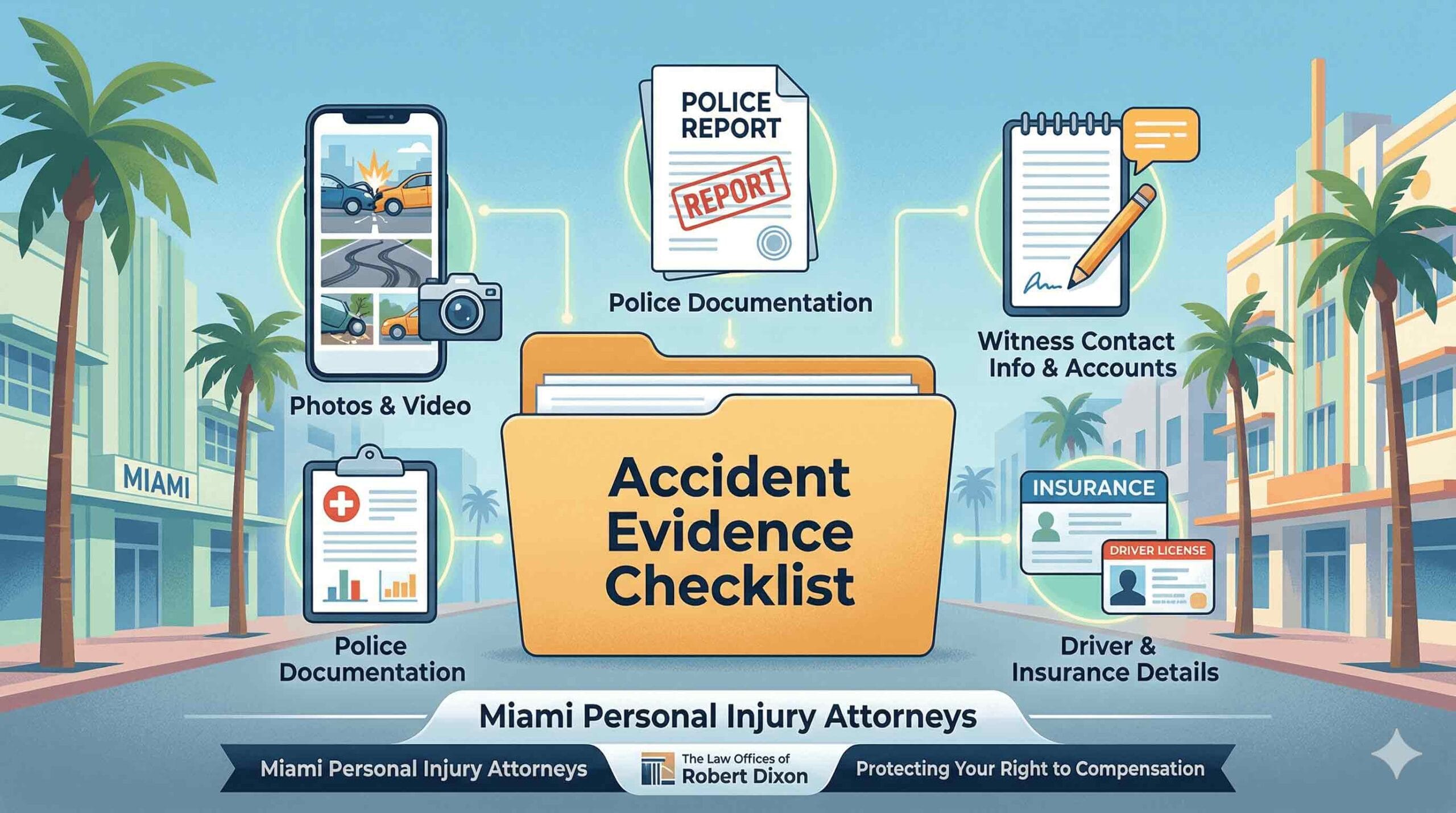
Gather Evidence: If you are physically able, take photos of the scene, vehicle damage, and your visible injuries.
Protect Your Claim: Never admit fault at the scene, and do not provide recorded statements to any insurance company without your lawyer present.
Contact a Trusted Miami Car Accident Brain Injury Attorney Today
Drivers who fail to exercise proper care on South Florida roadways must be held accountable for the devastation they cause. You do not have to navigate the complex legal system alone while struggling to recover from severe injuries.
Let the skilled, empathetic team at The Law Offices of Robert Dixon handle the insurance companies and aggressively fight for the maximum compensation you deserve.