Dealing with the aftermath of a collision is incredibly stressful, especially when facing mounting medical bills and lost wages. Engaging in settlement negotiations in car accident cases can feel overwhelming while you are simultaneously trying to recover from severe physical injuries.
Insurance adjusters are skilled negotiators whose primary goal is to minimize your financial payout. The Miami personal injury attorneys at the Law Offices of Robert Dixon have extensive experience leveling the playing field. We proudly serve individuals across Miami-Dade, Broward, and Palm Beach Counties, aggressively negotiating to secure the justice and financial relief you deserve.
Understanding Settlement Negotiations in Car Accident Cases
After a collision, victims urgently need financial assistance to cover property damage, past and future medical expenses, and rehabilitation costs. If your injuries are severe, you may suffer a diminished capacity to work, requiring substantial compensation for future lost earnings.
The negotiation process typically begins when your legal team sends a comprehensive demand letter to the at-fault party’s insurance company. This document outlines your injuries, provides supporting evidence, and requests a specific financial settlement. Often, the insurance adjuster will respond with a counteroffer that is significantly lower than your initial demand.
It is vital to remember that an adjuster’s job is to protect their company’s bottom line, not to offer you a fair settlement right out of the gate. Offers and counter-offers will go back and forth, and having a skilled attorney ensures you do not settle for less than you need.
Common Causes of South Florida Auto Accidents
To negotiate effectively, you must first establish exactly how the accident occurred. Most collisions are entirely preventable and stem from another driver’s careless behavior behind the wheel.
Frequent causes of serious collisions include:
Distracted Driving: Texting, eating, or adjusting navigation systems diverts a driver’s attention from the road just long enough to cause a devastating crash.
Speeding and Aggressive Driving: Traveling above the speed limit drastically reduces a driver’s reaction time and increases the severity of the impact.
Impaired Driving: Alcohol and drugs severely impair a motorist’s judgment, depth perception, and motor skills.
Failure to Yield: Ignoring stop signs, red lights, or right-of-way rules frequently leads to dangerous T-bone or rear-end collisions.
Types of Injuries Sustained in a Crash
The severity and permanence of your injuries play a massive role in the overall value of your claim. A thorough medical evaluation is absolutely essential before beginning any settlement talks.
Victims frequently suffer from:
Traumatic Brain Injuries (TBIs): Ranging from mild concussions to permanent cognitive damage that requires lifelong care.
Spinal Cord Injuries: Often causing chronic back pain, herniated discs, or partial paralysis.
Broken Bones and Fractures: Severe impacts can shatter bones, requiring extensive reconstructive surgeries and physical therapy.
Soft Tissue Damage: Severe whiplash that can cause long-term neck, back, and shoulder pain.
How Liability is Determined During Negotiations
Before an insurance company agrees to a settlement, liability must be firmly established. Your attorney must prove that the other party’s negligence directly caused your injuries and subsequent financial losses.
Establishing negligence requires proving four key legal elements:
Duty of Care: The other driver had a legal obligation to drive safely and obey all traffic laws.
Breach of Duty: The driver violated that obligation through a reckless action, such as running a red light or speeding.
Causation: This specific breach of duty was the direct and primary cause of the collision.
Damages: You suffered verifiable financial, physical, and emotional losses as a result.
Florida’s Modified Comparative Negligence Law
Insurance adjusters often try to shift the blame onto the victim to lower their own financial payout. However, even if you share some fault for the crash, you may still be entitled to compensation.
Florida operates under a modified comparative fault system. This means you can recover damages as long as you are not more than 50% responsible for the accident. Your final settlement award will simply be reduced by your assigned percentage of fault.
Crucial Steps for Successful Negotiations
Preparedness is the cornerstone of any successful legal negotiation. A victim must be equipped with undeniable proof to counter lowball insurance offers and articulate how their injuries have affected their daily life.
Crucial steps to protect your claim include:
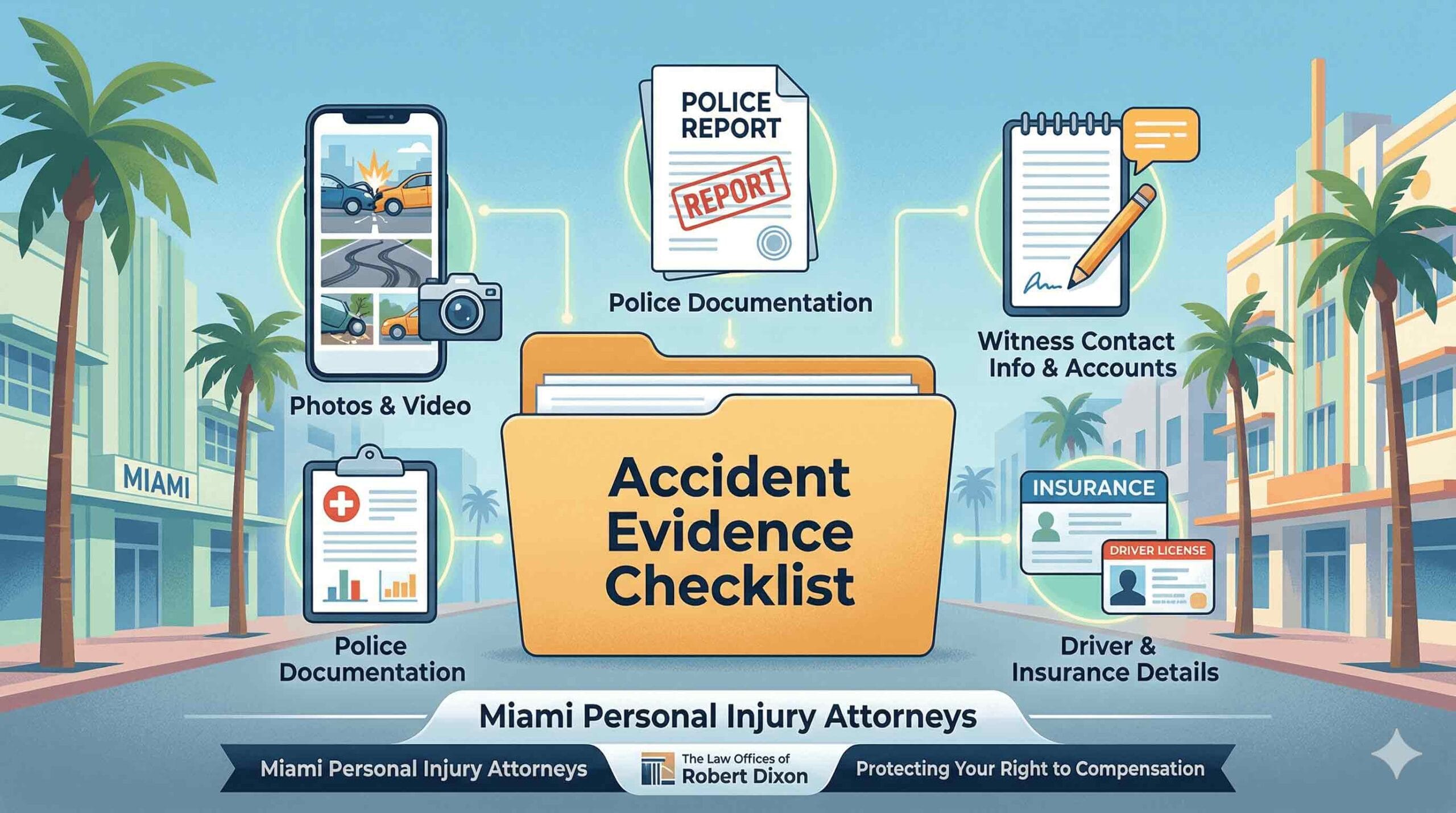
Gather Extensive Evidence: Collect official police reports, eyewitness statements, and photos of the scene and vehicle damage.
Document All Damages: Keep meticulous records of all medical bills, pay stubs for lost wages, and property repair estimates.
Detail Non-Economic Damages: Keep a daily journal documenting your physical pain, emotional distress, and loss of enjoyment of life.
Hire an Experienced Attorney: Let a legal professional handle the complex back-and-forth communication so you do not accidentally admit fault or accept an unfair offer.
The Strict Statute of Limitations
Time is of the essence when pursuing a car accident claim. Florida law places a strict legal deadline on your ability to file a personal injury lawsuit.
Currently, Florida law gives injury victims exactly two years from the date of the crash to file a negligence lawsuit. If settlement negotiations stall and you miss this critical deadline, you will be permanently barred from recovering any financial compensation, regardless of how severe your injuries are.
Contact a Trusted Miami Car Accident Attorney Today
Drivers who fail to exercise proper care on South Florida roadways must be held accountable for the devastation they cause. You do not have to navigate the complex legal system alone while struggling to recover from severe injuries.
Let the skilled, empathetic team at The Law Offices of Robert Dixon handle the insurance companies and aggressively fight for the maximum compensation you deserve.