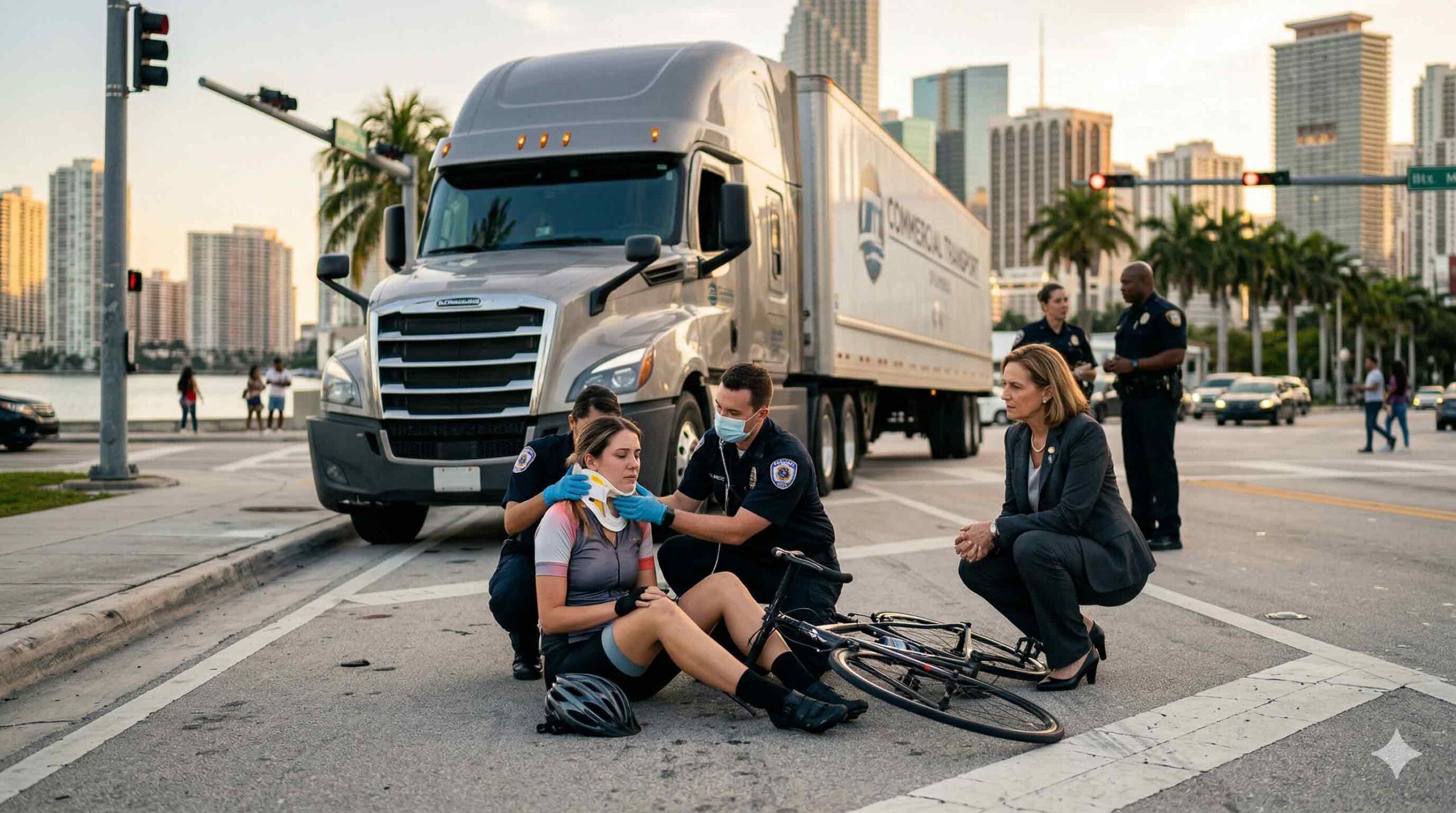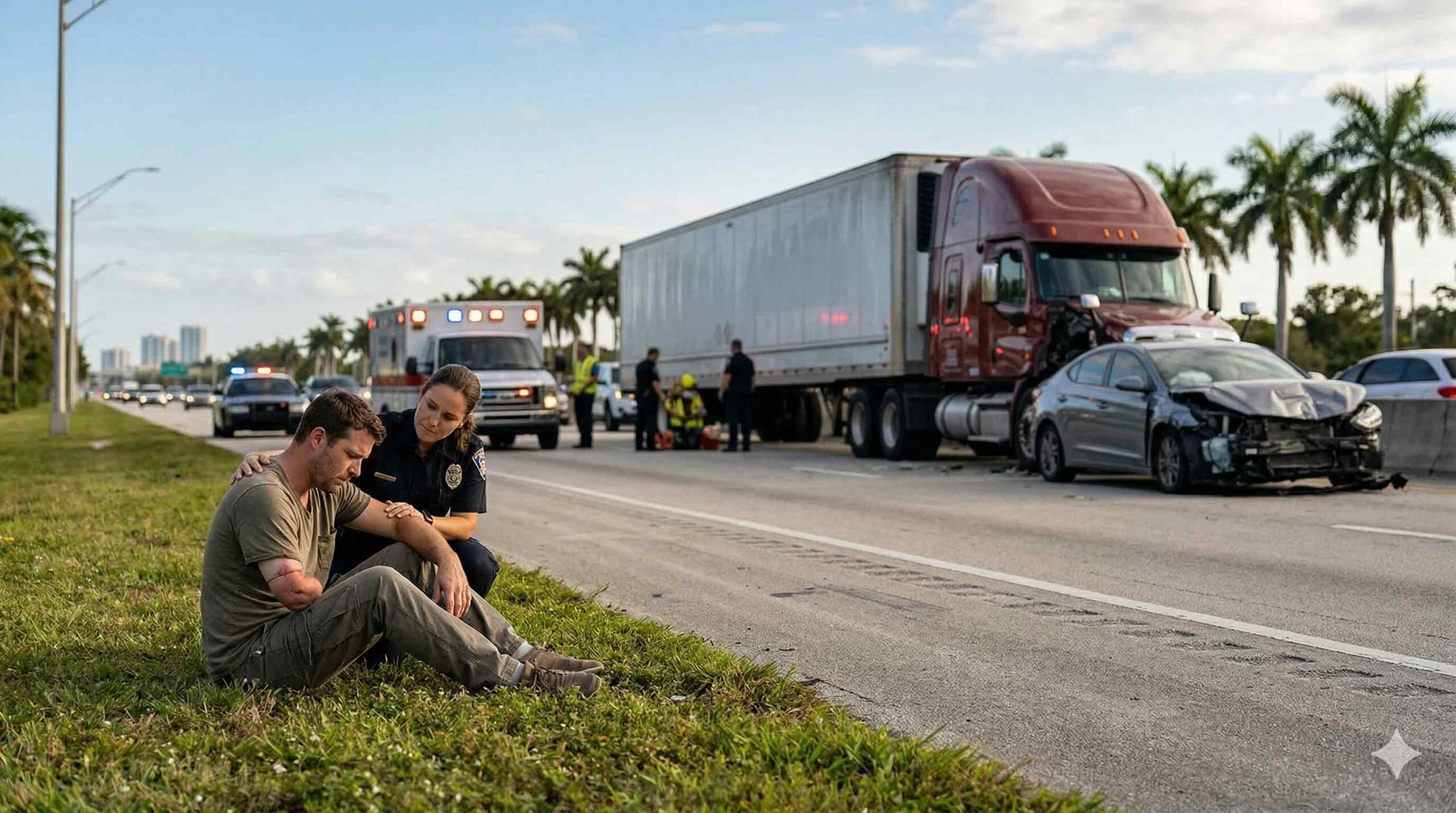
Losing your eyesight, whether partially or completely, is one of the most terrifying and life-altering experiences imaginable. Loss of vision arising from car accidents is a catastrophic event that shatters a victim’s physical, emotional, and financial well-being. Suddenly, everyday tasks become monumental challenges, and your independence is severely compromised.
If you or a loved one are facing this devastating reality due to another driver’s negligence, you deserve justice. Miami car accident lawyer Robert Dixon and his dedicated team are here to help. We assist victims across South Florida—including Miami-Dade, Broward, and Palm Beach Counties—in pursuing the maximum financial resources necessary to adapt to this new reality and secure their future.
Common Causes of Vision Loss Arising From Car Accidents
The sheer force of a high-speed collision can cause extensive trauma to the delicate structures of the eye and the brain. Vision impairment is not always an isolated injury; it frequently occurs alongside other severe trauma.
Some of the most common causes of crash-related eye injuries include:
Shattered Glass and Debris: Windshields and windows can shatter, sending sharp shards directly into the eyes, causing lacerations to the cornea or globe.
Airbag Deployment: While airbags save lives, their explosive deployment can cause severe blunt force trauma to the eyes, leading to detached retinas or optic nerve damage.
Chemical Burns: Battery acid or other toxic vehicle fluids can splash into a victim’s face during a severe wreck.
Blunt Force Trauma: Hitting the steering wheel or dashboard often leads to severe head trauma and facial and dental injuries.
Ejection: Being thrown from a vehicle, or surviving a motorcycle accident, dramatically increases the risk of catastrophic eye and brain trauma.
Types of Visual Impairment Sustained in Crashes
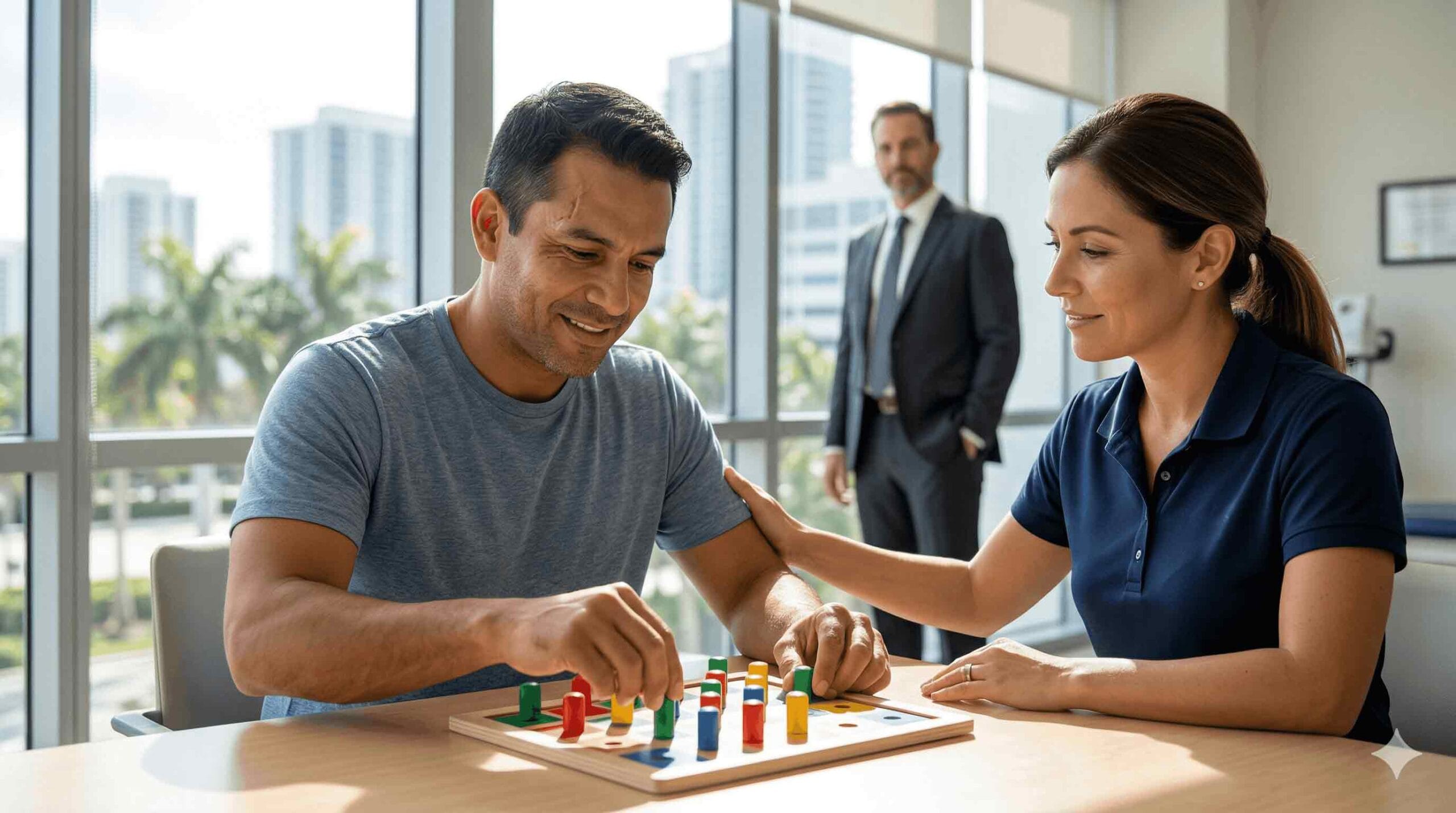
Physical injuries to the eyeball itself are sometimes repairable through emergency surgery. However, neurological damage is often permanent and life-changing. A traumatic brain injury can permanently disrupt the visual cortex, stripping a victim of their ability to process what they see.
Victims frequently suffer from the following visual impairments:
Loss of Tracking Ability: The inability to follow moving objects or read words across a page.
Loss of Fixation: An inability to focus on a single item, destroying hand-eye coordination.
Loss of Depth Perception: Losing the crucial ability to judge how far away an object is.
Peripheral Vision Loss: A permanent narrowing of the visual field, often called “tunnel vision.”
Light Sensitivity (Photophobia): Severe, debilitating pain when exposed to bright lights or sunshine.
Total or Partial Blindness: Complete loss of sight in one or both eyes.
How Liability is Determined in Vision Loss Cases
If your vision impairment was caused by a negligent driver, you have the right to file a personal injury lawsuit. To hold the at-fault party legally and financially accountable, your legal team must prove four distinct elements of negligence:
Duty of Care: The driver had a legal obligation to operate their vehicle safely and follow all traffic laws.
Breach of Duty: The driver violated that obligation through careless or reckless actions (e.g., speeding, texting, or driving under the influence).
Causation: This specific breach of duty was the direct cause of the collision and your resulting eye injury.
Damages: You suffered measurable losses, such as physical harm and financial devastation.
Florida’s Modified Comparative Negligence Law
Insurance companies often try to minimize payouts by blaming the victim. Fortunately, Florida law protects you. Under the state’s modified comparative fault system, you can still recover compensation even if you are partially to blame for the crash, provided you are not more than 50% at fault. Your final financial award will simply be reduced by your percentage of responsibility.
Recovering Compensation for Your Injuries
Permanent vision loss requires extensive medical treatment, rehabilitative efforts, and profound changes in how you live your day-to-day life. Pursuing maximum compensation is vital for your long-term survival and comfort.
Understanding the types of damages in car accident claims is essential. A skilled attorney can help you secure compensation for:
Past and Future Medical Bills: Including emergency surgeries, hospital stays, and ongoing vision therapy.
Long-Term Care and Adaptations: Costs for seeing-eye dogs, specialized technology, home modifications, and occupational therapy.
Lost Income and Earning Capacity: Compensation for time missed at work and the permanent loss of your ability to perform your previous job.
Pain and Suffering: Financial recovery for your physical pain, emotional trauma, depression, and loss of independence.
Steps to Take After an Accident Causing Eye Trauma
Your actions immediately following a crash are critical to preserving both your eyesight and your legal claim.
Seek Emergency Medical Eye Care: Go to the ER immediately. Prompt surgical intervention is often the only way to save a damaged eye.
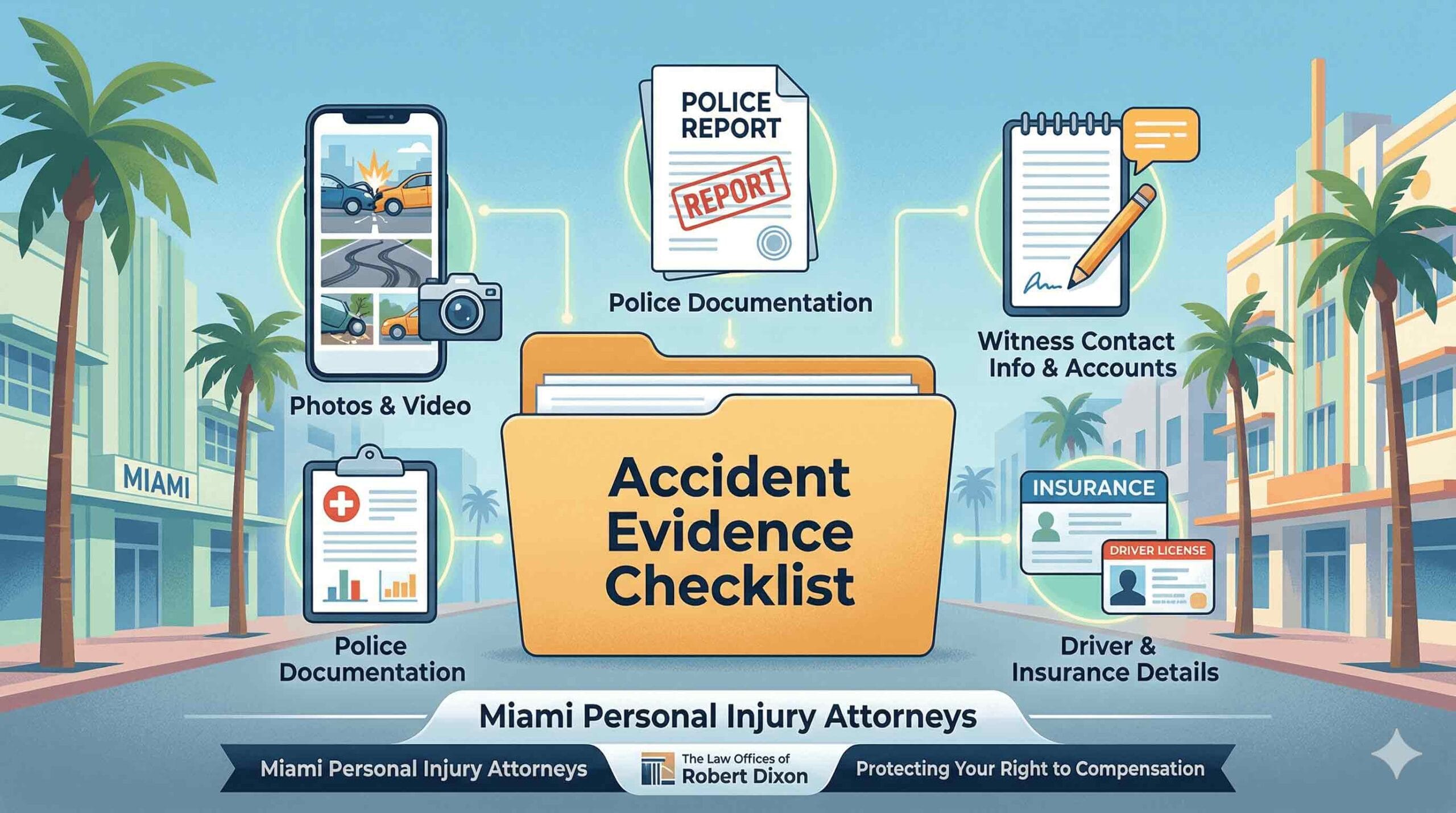
Document the Scene: If you are able, or have someone with you, take photos of the crash site, vehicle damage, and your visible injuries.
Do Not Speak to Insurance Adjusters: Insurance companies are not your friends. They will use your words against you to deny your claim.
Be Aware of the Statute of Limitations: Florida law recently changed. You now have strictly two years from the date of the crash to file a personal injury lawsuit. If you miss this deadline, you forfeit your right to compensation forever.
Contact a Trusted Miami Car Accident Vision Loss Attorney Today
Drivers who fail to exercise proper care on South Florida roadways must be held accountable for the devastation they cause. You do not have to navigate the complex legal system alone while struggling to recover from severe injuries.
Let the skilled, empathetic team at The Law Offices of Robert Dixon handle the insurance companies and aggressively fight for the maximum compensation you deserve.