In South Florida, sudden motor vehicle collisions happen every day, often leaving victims to deal with catastrophic physical, emotional, and financial burdens. When you are severely injured because another driver broke the law, you need to understand every legal avenue available to secure the compensation you deserve. One highly effective method of proving fault is establishing Negligence Per Se in Car Accident Cases.
If you can prove the at-fault driver caused your crash by violating a specific penal statute, they may be deemed legally negligent as a matter of law. However, navigating the intersection of civil claims and criminal traffic violations requires aggressive and experienced legal advocacy. Miami car accident attorney Robert Dixon and the dedicated team at the Law Offices of Robert Dixon provide personalized, relentless representation for victims across Miami-Dade, Broward, and Palm Beach Counties.
Understanding Negligence Per Se in Car Accident Cases
To succeed in a standard personal injury claim, the victim (the plaintiff) carries the burden of proof. You must show that the at-fault driver (the defendant) acted negligently.
In a traditional negligence claim, this requires proving four distinct legal elements:
Duty of Care: The defendant owed you a legal obligation to drive safely.
Breach of Duty: The defendant failed to meet that obligation.
Causation: The defendant’s specific failure directly caused the crash.
Damages: You suffered actual injuries and financial losses as a result.
However, Negligence Per Se in Car Accident Cases simplifies this process. Under this legal doctrine, the burden of proof is effectively lowered. If a plaintiff can show that the defendant violated a law enacted specifically to protect the public from harm, the first two elements—duty and breach—are automatically presumed.
Florida’s Specific Rules on Statutory Violations
It is crucial to understand that Florida law treats negligence per se differently than many other states. In Florida, you cannot claim negligence per se simply because the other driver violated a standard traffic rule, such as running a red light or speeding.
Instead, Florida courts require that the violated law be a non-traffic, penal statute. Because these distinctions are incredibly complex, a seasoned accident lawyer is essential to assess whether a negligence per se argument is appropriate and viable for your specific case.
Common Causes Involving Negligence Per Se in Car Accident Cases
The most frequent and devastating example of this legal concept involves intoxicated driving. When drivers cause catastrophic crashes while operating a vehicle under the influence of drugs or alcohol , they are not just making a poor choice—they are committing a crime.
Florida law strictly dictates that adults 21 or older with a blood alcohol concentration (BAC) of 0.08% or higher may not drive a motor vehicle. The state legislature enacted this penal statute explicitly to ensure the safety of motorists, passengers, and pedestrians.
Therefore, when an intoxicated person gets behind the wheel, violates this criminal statute, and causes a wreck, they are generally considered negligent as a matter of law.
Other potential, though less common, examples in Florida might involve:
Fleeing the scene of an accident involving severe injury or death (Felony Hit and Run).
Vehicular manslaughter or reckless driving that rises to the level of a criminal offense.
Operating a vehicle with intentionally disabled safety features in violation of specific criminal codes.
How Liability is Determined in These Claims
Even if a driver breaks a penal law, you do not automatically win a blank check. Liability must still be meticulously proven and connected to your injuries.
The Requirement of Causation
While negligence per se establishes that the defendant breached their Duty of Care, you must still prove Causation. This means your attorney must provide concrete evidence that the defendant’s statutory violation is what actually caused your injuries. If a drunk driver is rear-ended while safely stopped at a red light by a sober distracted driver, the drunk driver’s intoxication did not cause the crash.
Comparative Negligence in Florida
Florida operates under a “modified comparative negligence” system. This means that liability can be shared among multiple parties. If the insurance company can prove you were partially at fault for the crash—perhaps you were speeding when the drunk driver swerved into your lane—your total compensation will be reduced by your percentage of fault.
Crucially, under recent Florida law changes, if you are found to be more than 50% responsible for the accident, you are entirely barred from recovering any financial compensation. Insurance adjusters will aggressively try to shift the blame onto you to protect their bottom line, making top-tier legal representation vital.
Types of Injuries Sustained in Severe Collisions
Because negligence per se cases often involve egregious behavior like drunk driving, the resulting collisions tend to happen at high speeds and cause maximum devastation. Victims frequently require expensive hospitalizations, surgeries, and lifelong medical care.
Common injuries sustained in these high-impact crashes include:
Traumatic Brain Injuries (TBIs): Ranging from severe concussions to permanent cognitive impairment, TBIs can drastically alter a victim’s personality, memory, and ability to work.
Spinal Cord Damage: Herniated discs, nerve damage, and partial or total paralysis can result in permanent disability and the need for round-the-clock care.
Internal Organ Bleeding: The blunt force trauma of a high-speed wreck can cause life-threatening damage to the spleen, liver, or lungs, requiring emergency surgery.
Complex Bone Fractures: Crushing injuries frequently lead to shattered bones that require the surgical insertion of pins, plates, and screws to stabilize.
Recovering Damages and Compensation
When you successfully prove Negligence Per Se in Car Accident Cases, you open the door to recovering comprehensive financial compensation. The goal of a personal injury lawsuit is to “make the victim whole” again, at least financially.
Victims may receive compensation for:
Past, current, and future medical expenses related to the crash.
Lost wages and loss of future earning capacity if you cannot return to work.
Property loss and vehicle replacement costs.
Physical pain, emotional suffering, and diminished quality of life.
Wrongful Death Claims
Tragically, many crashes involving criminal negligence are fatal. In wrongful death claims, surviving family members may be awarded damages. This compensation covers burial and funeral expenses, outstanding medical bills incurred before the victim’s passing, and the profound loss of financial and emotional support.
Steps to Take After an Accident
The moments following a severe crash are chaotic, but your actions directly impact your ability to file a successful claim. To protect your physical health and your legal rights, follow these vital steps:
Seek Immediate Medical Attention: Your health is the absolute priority. Even if you feel fine, adrenaline masks pain. Go to the emergency room immediately to establish a documented medical record of your injuries.
Call 911 and Cooperate with Police: A formal police report is critical, especially if you suspect the other driver is intoxicated. Police officers can administer breathalyzers and make the arrests necessary to establish a negligence per se claim.
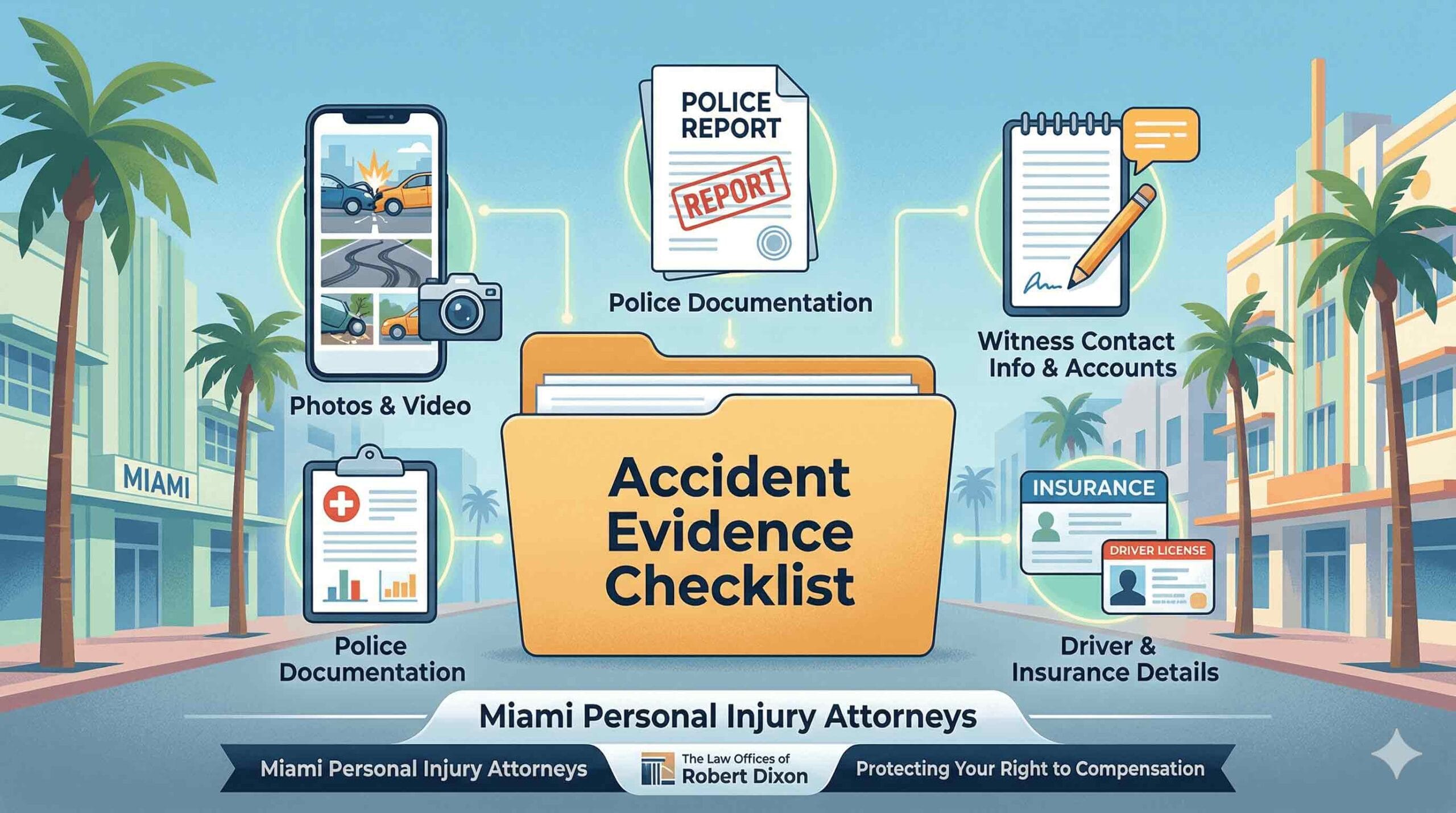
Document the Scene: If you are physically able, take photos of the vehicles, the roadway, traffic signs, and your visible injuries.
Do Not Speak to Insurance Adjusters: Insurance companies will call you quickly, hoping you will inadvertently admit fault or accept a lowball settlement offer. Decline to give a recorded statement until you have legal counsel.
Hire an Experienced Attorney: Retain a lawyer immediately to launch an independent investigation, preserve evidence, and handle all communications with aggressive insurance companies.
Be Aware of the Statute of Limitations
Time is strictly limited when pursuing legal action. Florida’s Statute of Limitations dictates the legal deadline for filing a civil lawsuit. For most personal injury claims arising from car accidents in Florida, you now have exactly two years from the date of the crash to file your lawsuit. If you miss this deadline, your case will be dismissed, and you will lose your right to pursue justice forever.
Contact a Trusted Miami Car Accident Attorney Today
Drivers who fail to exercise proper care on South Florida roadways must be held accountable for the devastation they cause. You do not have to navigate the complex legal system alone while struggling to recover from severe injuries.
Let the skilled, empathetic team at The Law Offices of Robert Dixon handle the insurance companies and aggressively fight for the maximum compensation you deserve. We offer a free, confidential consultation to help you understand your legal rights. Contact our office today to take the first step toward justice.