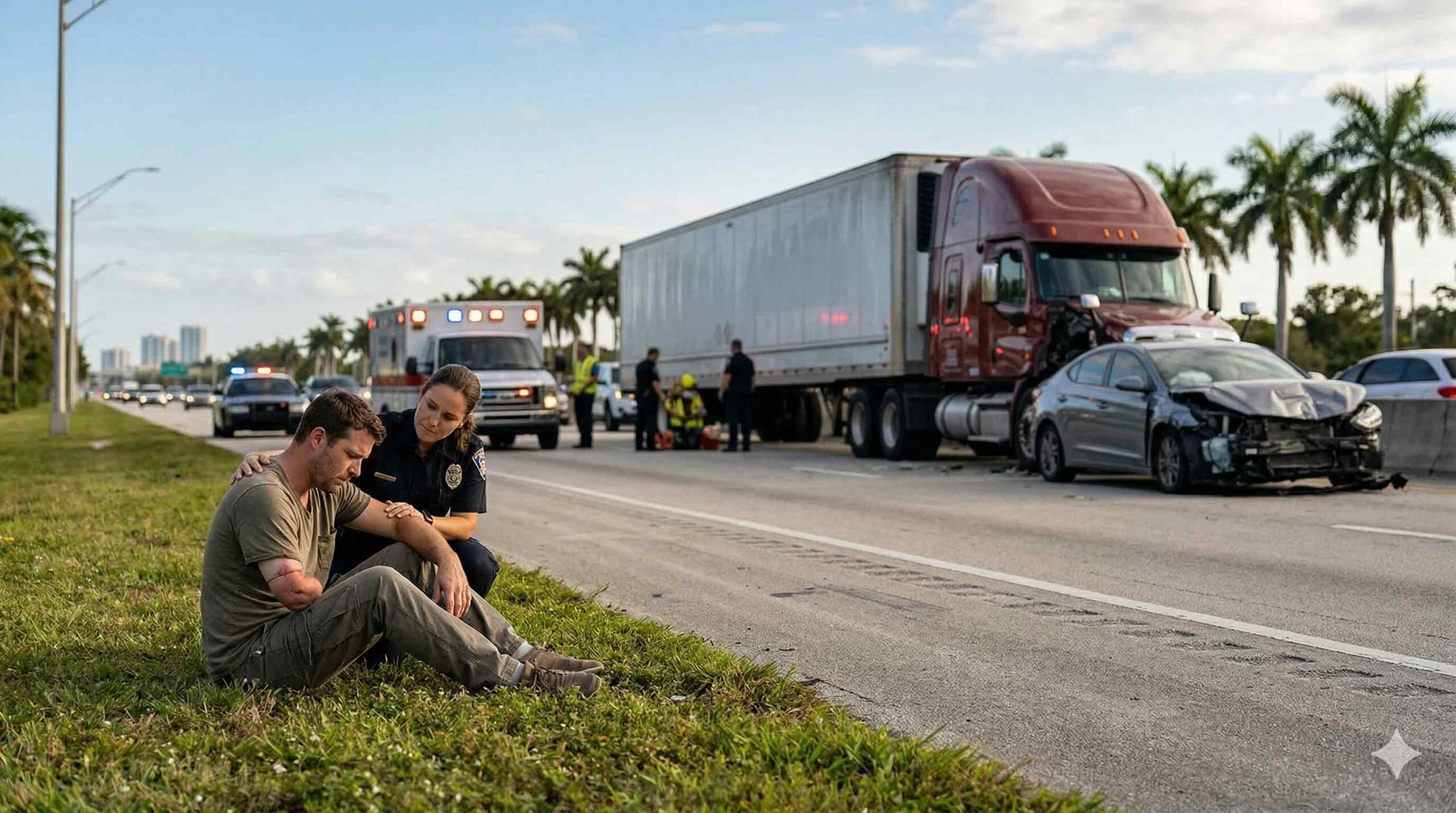
The aftermath of a severe car crash is often a profoundly stressful, disorienting, and painful experience. Victims frequently struggle to secure necessary medical care, deal with extensive property damage to their vehicles, and find a way to get back to work.
In addition to these overwhelming logistical problems, people hurt in an auto accident rarely have adequate financial resources set aside to navigate a sudden crisis. This financial strain becomes especially frustrating when the collision was entirely due to another person’s negligence. Among the most painful and debilitating traumas sustained in these collisions are Dashboard Knee Injuries.
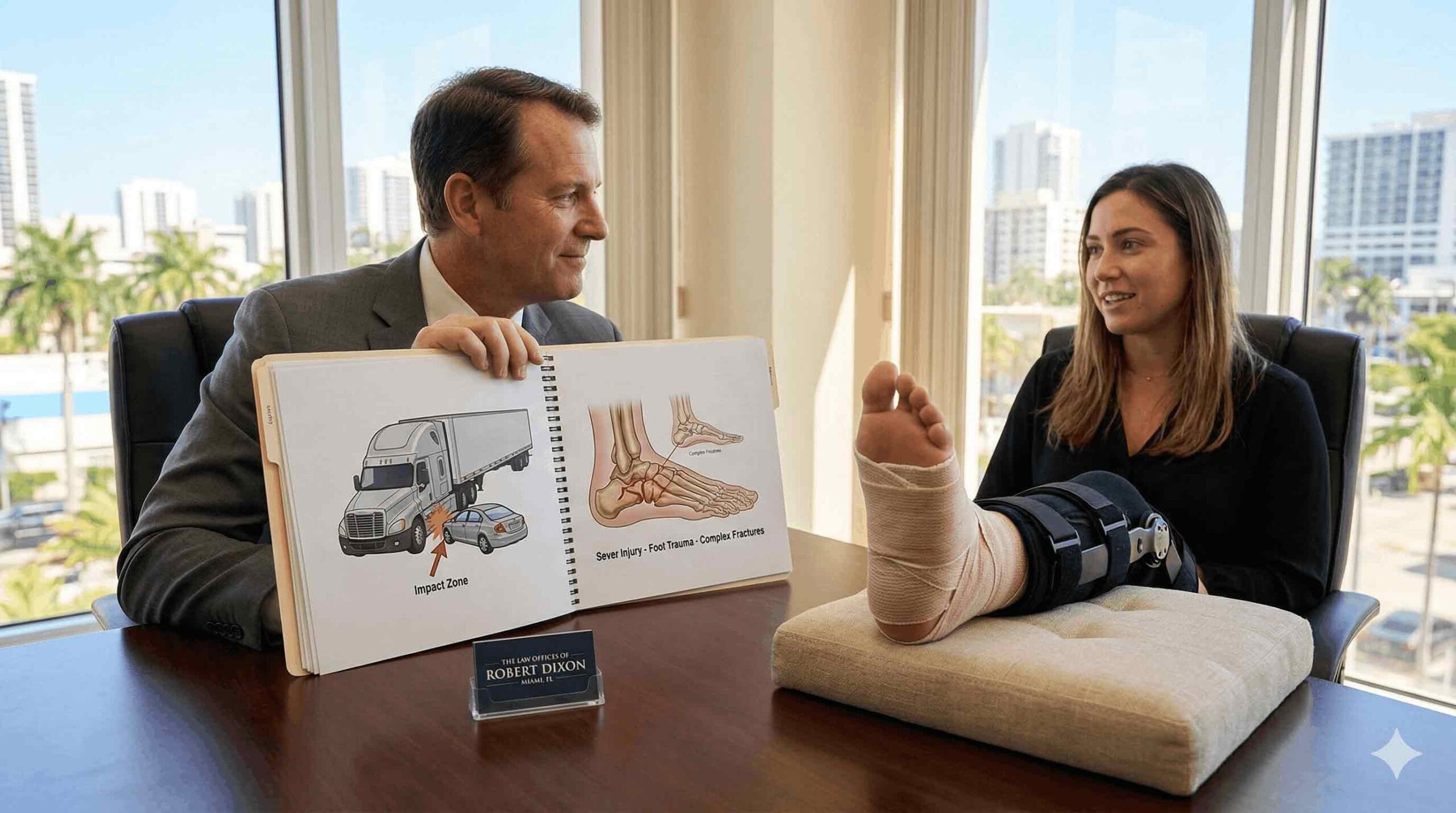
The injury lawyers at the Law Offices of Robert Dixon can advise residents of Miami and the surrounding areas who have been hurt in a car accident. We understand the physical, emotional, and financial toll these accidents take, and we are committed to helping you reclaim your life.
What Are Dashboard Knee Injuries? Understanding the Trauma
One of the most common and devastating injuries victims sustain in a motor vehicle collision occurs when their knees violently strike the hard plastic or metal of the dashboard. Even when wearing a seatbelt, the sheer force of a sudden impact can propel the lower body forward, causing severe blunt-force trauma to the joint.
A knee injury sustained in this manner requires immediate, specialized medical attention. If left untreated, the trauma can result in chronic pain, permanent mobility issues, and long-term disability.
The Medical Anatomy of the Injury
When the bent knee slams into a dashboard, the force pushes the shinbone (tibia) backward. This specific mechanism of injury is notorious for causing structural damage to the knee’s intricate network of ligaments and bones.
Common diagnoses associated with dashboard impacts include:
Posterior Cruciate Ligament (PCL) Tears: The PCL is the primary ligament that prevents the shinbone from moving too far backward. A “dashboard injury” is the leading cause of PCL tears, leading to extreme pain, swelling, and instability.
Patellar (Kneecap) Fractures: The direct blow to the dashboard can shatter the kneecap. This often requires invasive surgery, using pins and wires to reconstruct the bone.
Meniscus Tears: The cartilage that cushions the knee joint can tear under the immense pressure of the crash, causing the knee to lock or catch during movement.
Hip and Femur Complications: In severe crashes, the kinetic energy travels from the dashboard, through the knee, and into the femur, occasionally causing catastrophic hip dislocations.
Treatment and Long-Term Impact
A dashboard knee injury should be quickly evaluated by an orthopedic doctor to ensure proper diagnostic measures—such as MRIs and X-rays—are taken. Proper healing frequently involves reconstructive surgery, joint immobilization (splinting), and months of grueling physical therapy.
This trauma deeply affects a person’s day-to-day life. It becomes particularly devastating if the victim’s work involves difficult labor, heavy lifting, or prolonged standing. Furthermore, insurance companies will often try to minimize the claim if the victim has had past injuries or pre-existing arthritic conditions in their legs.
Leading Causes of Dashboard Knee Injuries in Auto Accidents
While these lower-extremity traumas can happen in various scenarios, they are most frequently linked to specific types of collisions. Understanding the mechanics of your crash is vital for accident reconstruction and proving liability.
Head-On Collisions
Dashboard Knee Injuries are most often sustained in head-on collisions. When two vehicles traveling toward each other collide, the compounding force brings the vehicles to a violent, immediate halt. The sudden deceleration causes the occupants’ lower extremities to hurdle forward, directly into the dashboard console.
Rear-End and T-Bone Crashes
Though less common than head-on crashes, severe rear-end impacts can push a driver’s vehicle into the car ahead of them, creating a secondary frontal impact. Similarly, T-bone crashes (side-impact collisions) can crumple the front cabin space, pinning the driver’s legs against the dashboard and steering column.
Proving Liability for Dashboard Knee Injuries
These devastating accidents are usually caused by another driver’s negligence. Therefore, the victim may be entitled to substantial financial compensation through a personal injury claim.
However, compensation is never guaranteed. To receive damages for your injuries, your legal team must clearly prove the four distinct legal elements of a negligence claim.
1. Duty of Reasonable Care
The first element consists of showing that the defendant owed you a duty of care. Under Florida law, every motorist owes a legal duty to operate their vehicle safely, obey traffic laws, and remain vigilant of others on the road.
2. Breach of Duty
We must prove that the defendant breached this duty. Unreasonable risks of harm—which the courts consider a breach—frequently arise from distracted driving (texting), driving under the influence (DUI), speeding, or failing to account for hazardous weather conditions.
3. Causation
The causation element of a negligence claim requires proving that the accident was a reasonably foreseeable result of the defendant’s careless conduct. We must demonstrate a direct link: you would not have sustained Dashboard Knee Injuries if the breach had not occurred, and if the defendant had taken appropriate precautions.
4. Damages
The final element comprises the actual damages incurred by the plaintiff as a direct result of the crash. We must provide quantifiable proof of your financial and physical losses to demand compensation.
Overcoming Insurance Company Tactics
Insurance adjusters are trained to protect corporate profits, not to offer you a fair settlement. When dealing with complex joint trauma, they rely on specific tactics to devalue your claim.
Common insurance defense strategies include:
The Pre-Existing Condition Argument: Adjusters frequently argue that your knee pain is due to age-related degeneration or prior sports injuries, rather than the crash.
The Delay in Treatment Argument: If you wait days or weeks to see a doctor, the insurance company will argue your injuries are not severe or were caused by a subsequent event.
Lowball Settlement Offers: They often offer a fast, inadequate settlement before you realize the full extent of your future medical needs.
An elite personal injury law firm counters these tactics by utilizing board-certified medical experts, biomechanical engineers, and accident reconstructionists to conclusively link your injuries to the crash.
Types of Compensation You Can Recover
Depending on the severity of the situation and the disruption to your life, a successful personal injury claim can yield multiple avenues of compensation.
Economic Damages (Financial Losses)
Economic damages are designed to reimburse you for out-of-pocket expenses.
Medical Costs: This includes ambulance fees, emergency room bills, MRIs, surgical costs, physical therapy, and required medical devices (crutches, braces).
Future Medical Care: Compensation for future surgeries or long-term pain management.
Lost Wages and Earning Capacity: Reimbursement for the time you missed from work, as well as compensation if your injury prevents you from returning to your previous profession.
Property Damage: The cost to repair or replace your damaged vehicle.
Non-Economic Damages (Intangible Losses)
Non-economic damages compensate you for the subjective, human cost of the crash.
Pain and Suffering: Compensation for the physical agony endured during the crash and the recovery process.
Emotional Distress: Damages for anxiety, depression, or PTSD resulting from the collision.
Loss of Enjoyment of Life: Compensation if your knee injury prevents you from enjoying hobbies, sports, or family activities you once loved.
Crucial Steps After Sustaining Dashboard Knee Injuries
The actions you take in the minutes, days, and weeks following your accident will drastically impact both your physical recovery and the strength of your legal claim. If you suspect you have suffered trauma to your knee, adhere to the following steps:
Seek Immediate Medical Evaluation: Never ignore knee pain after a crash. Adrenaline can mask severe structural damage. Go to an emergency room or urgent care immediately, and explicitly tell the doctor your knee hit the dashboard.
Call Law Enforcement: Always call 911. An official police report is a vital piece of evidence that documents the scene, the parties involved, and initial determinations of fault.
Document the Scene: If you are physically able, take photographs of your visible injuries, the damage to both vehicles, and the interior of your car (specifically the dashboard where your knee made an impact).
Refuse to Give Recorded Statements: Do not speak to the at-fault driver’s insurance adjuster, and never provide a recorded statement without your attorney present.
Follow Your Treatment Plan: Attend all physical therapy sessions and follow your doctor’s orders strictly. Gaps in treatment will be used against you by the defense.
Understanding Florida’s Comparative Negligence and Time Limits
Navigating the legal landscape requires a deep understanding of local statutes. Two crucial concepts will dictate the trajectory of your claim: Comparative Negligence and the Statute of Limitations.
Florida’s Comparative Negligence Law
Florida operates under a modified comparative negligence system. This means that even if you are found partially at fault for the accident, you can still recover damages, provided you are not more than 50% responsible. However, your total compensation will be reduced by your percentage of fault. An experienced attorney will aggressively defend you against unfair allegations of shared blame to maximize your payout.
The Statute of Limitations
The law imposes strict deadlines on how long you have to file a lawsuit. In Florida, recent legislative changes have shortened the statute of limitations for general personal injury claims resulting from negligence. If you fail to file your lawsuit within this strict legal window, you will permanently forfeit your right to seek financial compensation. Evidence disappears quickly, and witnesses forget critical details; therefore, early legal intervention is essential.
Contact a Trusted Miami Motorcycle Crash Attorney Today
Drivers who fail to exercise proper care on South Florida roadways must be held accountable for the devastation they cause. You do not have to navigate the complex legal system alone while struggling to recover from severe injuries.
Let the skilled, empathetic team at The Law Offices of Robert Dixon handle the insurance companies and aggressively fight for the maximum compensation you deserve.