South Florida is a vibrant metropolitan area, but it is deeply intertwined with sprawling rural landscapes and dense swamplands. Because of this unique geography, motorists frequently encounter wildlife crossing busy highways and suburban streets. Additionally, domestic pets or strays often wander unpredictably into a vehicle’s path.
When a sudden crossing occurs, it frequently leads to severe Car Accidents Caused by Animals in the Road. These sudden collisions are incredibly terrifying and dangerous for drivers, passengers, and nearby pedestrians. Victims are often left facing catastrophic physical trauma, mounting medical debt, and overwhelming emotional distress.
Navigating the aftermath of these complex crashes requires seasoned legal guidance. The dedicated legal team at the Law Offices of Robert Dixon assists victims across South Florida—including Miami-Dade, Broward, and Palm Beach Counties. We are committed to helping you pursue the justice and financial recovery you deserve.
The Reality of Car Accidents Caused by Animals in the Road
Animal-related collisions are not rare anomalies; they are a persistent hazard on Florida roadways. The element of surprise is what makes these crashes so uniquely devastating. Drivers have mere fractions of a second to react to a hazard darting into their lane.
High-Risk Times and Locations While an animal encounter can happen at any hour, statistical data shows clear patterns of heightened risk. Early mornings (between 5:00 AM and 8:00 AM) and evening hours (between 5:00 PM and 10:00 PM) are the most common times for wildlife collisions. During these hours, driver visibility is compromised by low light, and wild animal activity is at its daily peak.
Rural highways flanking the Everglades, heavily wooded suburban neighborhoods, and poorly lit backroads pose the highest risks. However, stray pets can trigger severe accidents even in the heart of downtown Miami.
Common Causes of Car Accidents Caused by Animals in the Road
Not every animal-related accident is entirely unavoidable. In many cases, the actions of other drivers in the moments immediately preceding the crash turn a minor hazard into a multi-vehicle catastrophe.
The Deadly Reflex: Swerving
When a driver spots an animal in the road, their natural, instinctual reaction is to violently jerk the steering wheel to avoid striking it. Unfortunately, swerving is incredibly dangerous. This evasive maneuver frequently causes the vehicle to veer into oncoming traffic, resulting in a deadly head-on collision.
Alternatively, a swerving vehicle may strike a tree, a guardrail, or an innocent pedestrian on the sidewalk. Safety experts universally agree that forcefully braking while maintaining your lane is vastly safer than swerving blindly.
Tailgating and Chain Reaction Crashes
Following another vehicle too closely—known as tailgating—is a primary cause of secondary collisions. If a lead vehicle correctly applies their brakes to avoid hitting a dog or deer, a tailgating driver will not have adequate stopping distance.
This inevitably causes a violent rear-end collision. In these scenarios, the tailgating driver is typically held legally liable for the resulting damages, as they failed to maintain a safe following distance.
Types of Injuries Sustained in Animal-Related Collisions
Because these crashes often involve sudden deceleration, high speeds, or secondary impacts with other vehicles, the resulting physical trauma is often life-altering. Victims rarely walk away without requiring immediate and extensive medical intervention.
Common injuries resulting from these collisions include:
Traumatic Brain Injuries (TBI): The violent force of an impact can cause the brain to strike the inside of the skull, leading to concussions or severe cognitive impairment.
Spinal Cord Damage: Sudden jolts frequently cause whiplash, herniated discs, or partial paralysis, requiring specialized long-term care.
Internal Organ Damage: Seatbelts and steering wheels can cause blunt force trauma to the abdomen, leading to dangerous internal bleeding.
Complex Bone Fractures: Crushing forces in the cabin often shatter legs, arms, and ribs, necessitating painful reconstructive surgeries.
The emotional toll is equally heavy. Victims often develop driving anxiety, Post-Traumatic Stress Disorder (PTSD), and profound depression as they grapple with their loss of mobility and independence.
How Liability is Determined After a Crash
A common misconception is that if an animal caused the crash, no one can be held legally accountable. While you cannot sue a wild animal, human negligence frequently plays a direct role in the severity of the accident.
To successfully file a personal injury claim, your legal team must prove four distinct elements of negligence: Duty of Care, Breach of Duty, Causation, and Damages.
Breaching the Duty of Reasonable Care
Every motorist owes a legal duty to operate their vehicle as a reasonable, prudent person would under similar circumstances. If another driver breached this duty—such as by texting, speeding in a known wildlife zone, or driving under the influence—they can be held liable.
For instance, if a passenger is injured because their driver chose to dangerously swerve into a ditch rather than brake for an animal, the driver can be held accountable for those injuries. Furthermore, if a domestic pet causes a crash, the pet owner may be held liable under Florida law for failing to properly secure their animal.
Understanding Florida’s Comparative Negligence
Florida operates under a modified comparative negligence system. This means you can still recover financial compensation even if you were partially to blame for the crash—provided you are not more than 50% at fault.
For example, if you were slightly speeding when another driver recklessly swerved into your lane to avoid a stray dog, a jury might find you 10% at fault. Your total settlement would simply be reduced by that 10%. An aggressive legal team is vital to protect you from unfair blame.
Dealing With Insurers After Car Accidents Caused by Animals in the Road
Securing fair compensation requires navigating a complex maze of insurance policies. Florida is a “no-fault” auto insurance state. This means your own Personal Injury Protection (PIP) coverage is the first line of defense, paying for initial medical bills regardless of who caused the crash.
However, PIP limits are notoriously low (typically $10,000) and rarely cover the catastrophic costs of a severe collision. To seek full compensation for property loss, future medical expenses, and emotional pain, you must pursue a bodily injury liability claim against the negligent party.
Overcoming Bad Faith Insurance Tactics
Insurance companies prioritize corporate profits over your physical recovery. They frequently attempt to offer offensively low settlements before you fully understand the extent of your medical needs. Dealing with uncooperative insurers is incredibly frustrating when you are trying to heal.
Insurers have a legal duty to act in a fair and reasonable manner when assessing a claim. If they unjustly delay, deny, or undervalue your claim, they can be held accountable for acting in bad faith. Hiring a skilled attorney forces the insurance company to take your claim seriously.
Recovering Maximum Financial Compensation
When a preventable accident upends your life, you deserve comprehensive financial relief. Calculating the true, lifetime cost of your injuries requires legal and medical expertise. We meticulously document every loss to ensure you are fully compensated.
By filing a robust personal injury lawsuit, victims can seek comprehensive damages in car accident cases.
Recoverable damages typically include:
Past and Future Medical Expenses: Covering emergency room visits, surgeries, physical therapy, and lifelong medical equipment.
Lost Wages and Earning Capacity: Replacing the income you lost while hospitalized, and compensating you if your injuries prevent you from returning to your career.
Pain and Suffering: Financial compensation for the physical agony and diminished quality of life caused by the crash.
Property Damage: The costs required to repair or completely replace your totaled vehicle.
Steps to Take After Car Accidents Caused by Animals in the Road
The moments immediately following a collision are chaotic and terrifying. However, the actions you take at the crash scene will drastically impact the success of your future legal claim.
Protect your physical safety and legal rights by following these vital steps:
Prioritize Safety First: Safely pull your vehicle off the road if possible. Immediately activate your emergency flashing hazard lights.
Contact Law Enforcement: Call 911 immediately. An official police report is a crucial piece of objective evidence for your insurance claim.
Do Not Touch the Animal: Even a domesticated pet can become aggressive and bite when it is injured, stressed, and in pain. Wait for animal control.
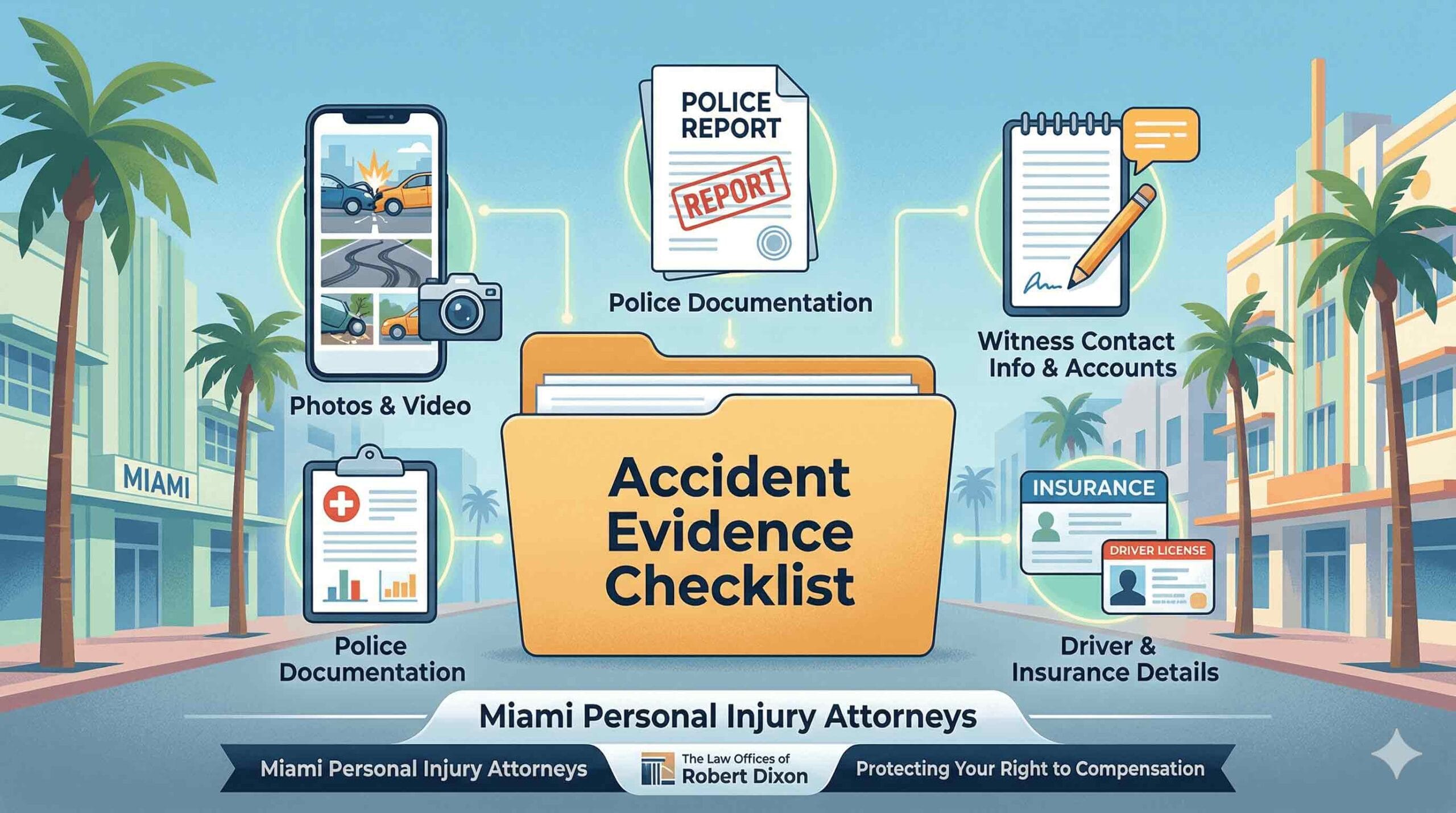
Document the Scene: Take clear, well-lit photographs of your vehicle damage, the surrounding environment, skid marks, and any visible injuries you sustained.
Seek Immediate Medical Care: Never ignore pain after a crash. Adrenaline can mask the symptoms of severe internal injuries. Visit an emergency room or urgent care center right away.
Be Aware of the Statute of Limitations
In Florida, the law imposes a strict deadline on how long you have to file a personal injury lawsuit. Recent legislative changes have shortened the statute of limitations for general negligence claims to just two years from the date of the accident. If you miss this strict legal window, you will permanently forfeit your right to seek justice.
Contact a Trusted Miami Car Accident Attorney Today
Drivers who fail to exercise proper care on South Florida roadways must be held accountable for the devastation they cause. You do not have to navigate the complex legal system alone while struggling to recover from severe injuries.
Let the skilled, empathetic team at The Law Offices of Robert Dixon handle the insurance companies and aggressively fight for the maximum compensation you deserve.