The Hidden Danger: Internal Organ Injuries in Car Accidents
A violent collision can lead to a host of significant, life-altering physical trauma. While lacerations and broken bones are immediately obvious, some of the most dangerous conditions are hidden beneath the skin. Internal organ injuries in car accidents are incredibly deceptive, as symptoms often do not appear for hours or even days after the crash.
When you are involved in a traumatic event, your body releases a massive surge of adrenaline and endorphins. This natural “fight or flight” response effectively masks pain. Because of this, you might walk away from a severe car accident feeling perfectly fine, entirely unaware that you are bleeding internally.
If an internal organ injury goes untreated, it can rapidly deteriorate. Furthermore, if these injuries are not quickly diagnosed by a medical professional in the immediate aftermath of a collision, aggressive insurance companies will undoubtedly argue that your injuries were unrelated to the crash. Prompt diagnosis is vital to your physical survival and the strength of your personal injury claim.
Mechanisms of Trauma: How Internal Organ Injuries in Car Accidents Occur
The human body is simply not built to withstand the extreme kinetic forces generated by high-speed collisions. When a vehicle suddenly stops, the bodies inside continue moving until they are stopped by seatbelts, airbags, or the vehicle’s interior.
Internal organ injuries in car accidents are generally caused by three distinct types of physical trauma:
Blunt Force Trauma: This occurs when a victim is thrown forcefully against a hard, stationary object during the collision. Your chest or abdomen may violently strike the steering wheel, dashboard, or even a deploying airbag. The intense pressure compresses blood vessels and crushes internal organs. Blunt trauma is incredibly common during a vehicle rollover or in cases involving an ejection from the vehicle.
Decelerating Trauma: This is one of the most difficult types of trauma to diagnose. During a high-speed crash, your vehicle and your skeletal structure may come to a sudden, violent stop. However, your internal organs—which are suspended in fluid—continue to travel forward at the vehicle’s previous speed. They crash against the inside of your skeletal cavity, causing severe bruising, tearing, and internal bleeding. This whiplash-like effect is a primary cause of severe heart and lung damage, as well as catastrophic brain injuries when the brain violently impacts the inside of the skull.
Penetrating Trauma: This occurs when a sharp object pierces the skin and enters the body cavity, directly lacerating internal organs. In severe collisions, shattered glass, jagged metal from the crumpled car frame, or loose objects flying through the cabin can cause deep puncture wounds.
Common Types of Injuries Sustained
Because decelerating and blunt trauma can affect multiple bodily systems simultaneously, victims often suffer cascading medical emergencies. Any major organ—including the liver, kidney, spleen, heart, lungs, pancreas, and brain—can be severely compromised.
Some of the most dangerous and frequently diagnosed internal injuries include:
Ruptured Spleen: The spleen is highly vulnerable to abdominal trauma. A rupture causes massive internal bleeding into the abdominal cavity, requiring emergency surgical intervention or complete removal.
Liver Lacerations: Located on the right side of the abdomen, the liver is easily torn by blunt force trauma or broken ribs. A damaged liver can lead to severe blood loss and bile leakage.
Punctured Lungs (Pneumothorax): If the force of a crash fractures your ribs, the jagged bone ends can puncture your lung. This causes the lung to collapse, making breathing incredibly painful and severely reducing oxygen levels.
Intestinal Perforations: A tear in the bowels or intestines will leak stomach acid, bacteria, and fecal matter into the abdominal cavity. This rapidly causes sepsis—a life-threatening whole-body infection.
Kidney Damage: Usually resulting from violent impacts to the lower back or flanks, severe kidney trauma may require dialysis or an organ transplant.
Without immediate emergency surgery, severe internal bleeding and organ failure can easily become fatal.
Watch for These Delayed Symptoms
Never assume you are uninjured simply because you do not have open wounds. Seek immediate emergency medical care if you experience any of the following symptoms in the days following a crash:
Deep, purple bruising across the chest or abdomen (often mirroring the shape of a seatbelt).
Abdominal pain, tenderness, or a hard, rigid stomach.
Severe dizziness, fainting, or lethargy (signs of low blood pressure and internal bleeding).
Nausea or vomiting.
Shortness of breath or sharp pain when inhaling.
Blood in your urine or stool.
Common Causes of These Crashes
Most collisions resulting in major organ damage are entirely preventable and stem from negligent driving behaviors. South Florida highways are notoriously congested, and a single momentary lapse in judgment can cause devastation. Common causes include:
High-Speed Collisions: Speeding exponentially increases the violent force of an impact, drastically raising the likelihood of decelerating trauma.
T-Bone (Side-Impact) Crashes: When a driver runs a red light or stop sign, they often strike the side of another vehicle. Because vehicle sides have far less structural protection than the front or rear bumpers, victims absorb massive amounts of blunt force trauma.
Distracted Driving: Texting, browsing social media, or eating while driving prevents motorists from braking in time, leading to full-force, rear-end collisions.
Impaired Driving: Drunk or drugged drivers suffer from delayed reaction times and poor judgment, frequently resulting in catastrophic head-on collisions.
How Liability is Determined for Internal Organ Injuries in Car Accidents
Treating internal organ damage often involves emergency surgeries, prolonged ICU stays, and extensive rehabilitative therapy. The resulting medical bills can easily bankrupt a family. To secure the compensation you desperately need, your legal team must prove that the other driver’s negligence caused your injuries.
In personal injury law, determining liability requires establishing four critical elements:
1. Duty of Care
Every motorist on Florida roads owes a legal Duty of Care to everyone else. This means they have a mandatory obligation to obey traffic laws, drive soberly, and operate their vehicle as a reasonable, prudent person would.
2. Breach of Duty
We must prove that the at-fault driver committed a Breach of this duty. If a driver was texting, speeding, driving aggressively, or running a red light, they breached their legal obligation to drive safely.
3. Causation
This is often the most heavily contested element in internal organ injury cases. We must prove Direct Causation—meaning the driver’s breach of duty directly caused your specific medical trauma. Because internal injuries can take days to manifest, insurance companies love to argue that the injury was caused by a separate, unrelated event after the crash.
4. Damages
Finally, we must prove that you suffered quantifiable Damages, such as immense hospital bills, lost wages from missing work, and severe physical pain and suffering.
Understanding Florida’s Modified Comparative Negligence
Florida operates under a strict Modified Comparative Negligence system. If you are found partially at fault for the crash, your total financial compensation will be reduced by your percentage of blame. Crucially, if the insurance company can successfully argue that you were more than 50% responsible for the accident, you are barred from recovering any compensation whatsoever. This is why having an aggressive legal advocate is non-negotiable.
The Florida Statute of Limitations
Time is not on your side. For most negligence-based car accident claims filed after March 24, 2023, Florida law dictates a strict two-year statute of limitations. If you fail to file a formal lawsuit within two years of the crash date, your right to seek financial justice is permanently revoked.
Steps to Take After an Accident to Protect Your Claim
The actions you take at the crash scene and in the days following are critical to protecting your health and your legal rights.
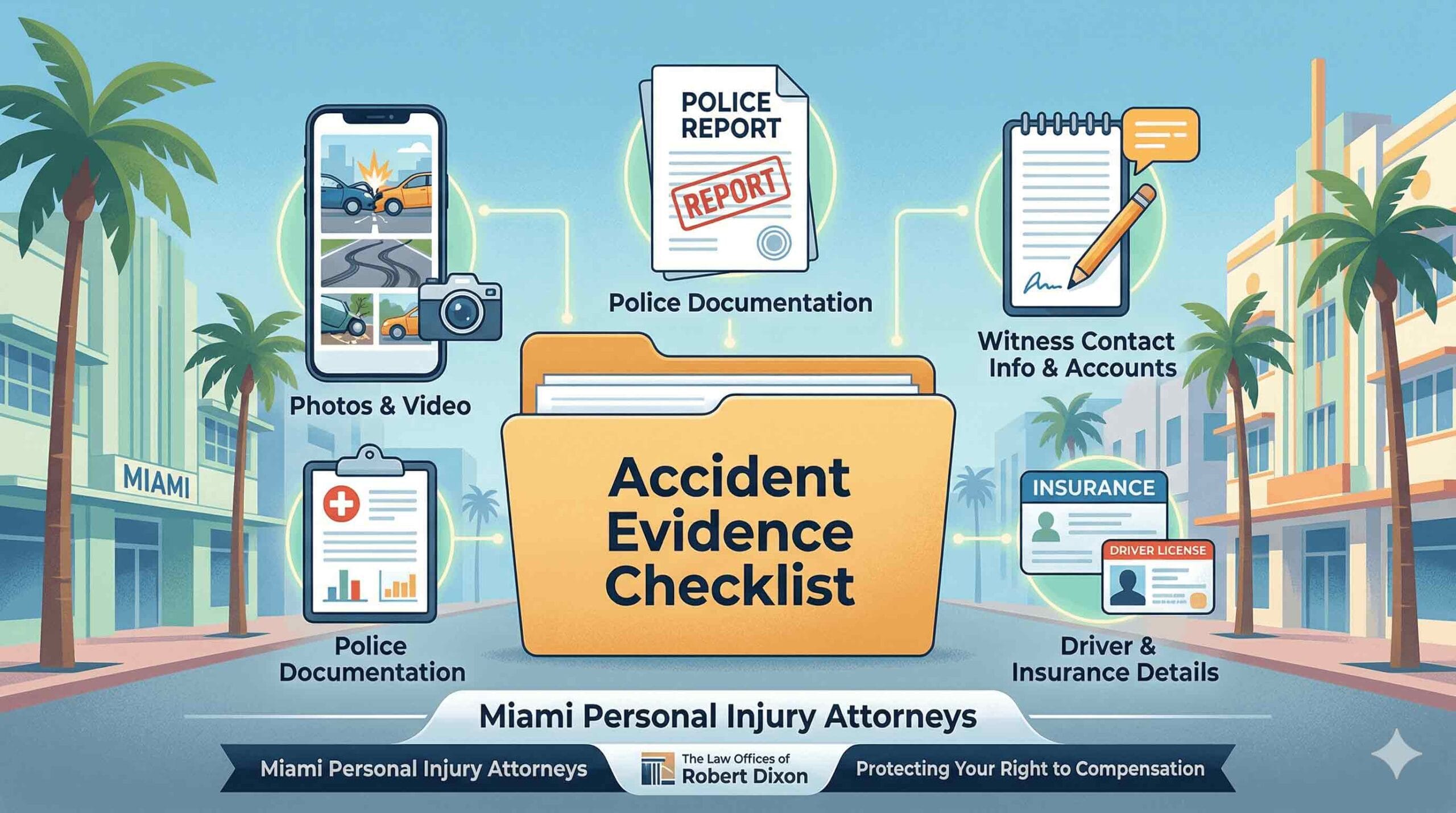
Call 911 Immediately: Always ensure a police officer arrives to create an official crash report. This report is foundational evidence for your insurance claim.
Seek Immediate Medical Attention: Go to the emergency room immediately, even if you feel fine. Diagnostic imaging (like CT scans or MRIs) is the only way to detect internal bleeding before it becomes fatal.
Document Everything: If you are physically able, take photos of the vehicle damage, skid marks, road conditions, and any visible bruises.
Do Not Give a Recorded Statement: Insurance adjusters will call you quickly, pretending to be helpful. Do not give them a recorded statement without your attorney present. They will use your words to minimize your injuries or shift liability onto you.
Contact a Trusted Miami Motorcycle Crash Attorney Today
Drivers who fail to exercise proper care on South Florida roadways must be held accountable for the devastation they cause. You do not have to navigate the complex legal system alone while struggling to recover from severe injuries.
Let the skilled, empathetic team at Law Offices of Robert Dixon handle the insurance companies and aggressively fight for the maximum compensation you deserve.